

Short answer
Pick a whey isolate with a certification you can look up, such as NSF Certified for Sport. Of 16 protein powders sold in the US, 5 passed our checks, and all 5 are whey isolates. No plant powder passes yet: in Consumer Reports testing, plant powders averaged nine times the lead of dairy ones. Collagen is not a substitute.
Start here
What matters most to you?
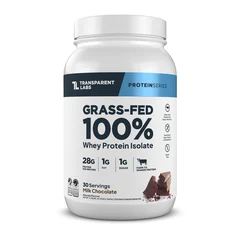 I want the most protein per dollar→ Transparent Labs28 g a scoop, about $1.93 per 25 g
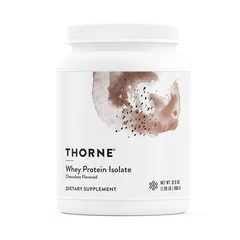 I want the seal to cover my tub→ Thorne20+ certified lots listed
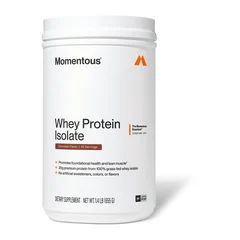 I want no sugar at all→ Momentous0 g sugar, monk fruit and stevia
Before you buy, we’d ask you
Are you lifting weights?
The muscle benefit comes from the training. Extra protein adds a small amount on top.
Do you already eat enough protein?
No trial shows a powder does anything the same protein from food doesn’t. It is a convenience.
Any kidney problem, even mild?
Talk to your doctor first. In women with mild kidney insufficiency, more protein was linked to faster decline.
Three we’d buy · US
Our ranking
These are our ratings, not customer reviews. We score independent testing (40%), value in the US (25%), label and form (20%) and transparency (15%). How we judge →
Transparent Labs Grass-Fed Whey Protein Isolate
★★★★★4.6✓ The most protein per dollar of the certified wheys, and the brand links a lab certificate on the product page.
! No independent lab has published a lead result naming this product.
Thorne Whey Protein Isolate
★★★★★4.5✓ More than 20 certified lots listed in the NSF database, so the seal covers what is actually on the shelf.
! It has 3 g of cane sugar per scoop, and no public lead result names it.
Momentous Whey Protein Isolate
★★★★★4.3✓ Zero sugar, and its earlier vanilla formula had the lowest lead in Consumer Reports’ first test (30% of CR’s level).
! That tested formula has been discontinued, and this is the priciest whey here.
Two more pass: Klean Athlete Klean Isolate and Garden of Life Sport Grass Fed Whey. Both are NSF Certified for Sport; we couldn’t confirm their US prices, so they aren’t ranked. See all 16 →
The lead question
What independent tests found
Consumer Reports bought and tested 28 protein powders and shakes in 2025 and 2026. It measures lead against 0.5 micrograms a day, California’s warning level and the strictest benchmark there is. Plant-based powders averaged nine times the lead of dairy-based ones.
Whey · chocolate · CR: fine daily · source →
Whey · chocolate · CR: fine daily · source →
Plant · chocolate · CR: 1 serving a day · source →
Plant · chocolate · CR: up to 6½ servings a week · source →
Plant · vanilla · CR: about 4¾ servings a week · source →
Plant · NSF certified · CR: limit to once a week · source →
Plant · 7.7 mcg a serving · CR: avoid · source →
The white line is 100% of Consumer Reports’ level of concern. The bar stops at 600%. One flavor was tested per product. CR says none of these would cause immediate harm; its concern is daily use over years. The FDA has no lead limit for protein powders.
None of our three picks has a public lead result naming the product on sale today. That is the honest gap in this page: we pass them on a certification you can look up, on being whey, and on what the brands publish. When an independent lab names them, we will update the ranking either way.
Not recommended
What we’d skip
Garden of Life Sport Organic Plant-Based Protein
NSF Certified for Sport, and still 564% of Consumer Reports’ lead level in a named test. The clearest proof that a seal is not a lead result.
Naked Nutrition Vegan Mass Gainer
The highest lead in Consumer Reports’ test: 7.7 mcg a serving, 1,572% of its level. CR says avoid.
Vital Proteins Collagen Peptides
Properly certified, but collagen is not a complete protein. In older women it did not raise muscle building; whey did.
Orgain Organic Protein
Over Consumer Reports’ level (143%), and we found no certifier listing for it.
Why no plant powder passes yet
Plants take up lead and cadmium from soil, and pea and rice proteins concentrate it. In Consumer Reports’ tests the best plant powders, Truvani and Ritual, landed at about its level of concern, and the worst were five to fifteen times over. Ritual is the most open of them: it holds an NSF contents certification and prints lot results on its page.
If you avoid dairy, those two are the closest to a pass. We’d treat them as a few-times-a-week option until a certified plant powder posts a clearly low result.
the lead in plant powders versus dairy ones, on average
Consumer Reports, 2025 →the gap between NSF’s lead ceiling and California’s warning level
Consumer Reports, 2025 →Does it actually work?
Less than the tubs suggest. The evidence is about total protein and strength training, not about powder.
Muscle, with strength training
49 trials, 1,863 people: protein supplements added about 0.3 kg of lean mass on top of training. The benefit shrank with age.
Morton 2018, meta-analysis →More protein after menopause
23 postmenopausal women, 10 weeks of training: 1.2 g/kg a day built no more lean mass than 0.8.
Rossato 2017, trial →Collagen for muscle
22 older women: whey raised muscle protein synthesis. Collagen peptides did not.
Oikawa 2020, trial →Kidneys, if yours are healthy
28 trials, 1,358 adults without kidney disease: higher-protein diets did not change kidney filtration.
Devries 2018, meta-analysis →How to buy it right in the US
- Choose a whey isolate unless you avoid dairy.
- Look for NSF Certified for Sport, then check your flavor and lot at nsfsport.com. A seal covers a product, a flavor and often a tub size.
- Check the label for at least 20 g of protein, a named sweetener and 3 g of sugar or less.
- Buy from the brand or its official store, not a random marketplace seller.
Questions
Is whey better than plant protein for building muscle?
Not proven. Head-to-head trials of soy or pea against whey found no difference in muscle or strength, but they were small and mostly in young men. Our whey-only pass list is about lead test results, not about which protein builds more muscle.
Is the lead in protein powder dangerous?
Consumer Reports says none of the products it tested had enough lead to cause immediate harm. Its concern is daily use over years, measured against California’s 0.5 microgram a day warning level, the strictest benchmark there is. The FDA has no lead limit for protein powders.
Does NSF certification mean low lead?
No. Consumer Reports gives NSF’s lead ceiling as 10 micrograms a day, twenty times California’s warning level. Certification screens for label accuracy, banned substances and gross contamination. One NSF-certified plant powder still tested at 564% of Consumer Reports’ level.
How much protein do women over 40 need?
Expert groups recommend at least 1.0 to 1.2 grams per kilogram of body weight a day for adults over 65, more if they exercise. The studies behind “older adults need more per meal” were done in men aged about 70. There is no equivalent study in women aged 40 to 60. This describes the research, not advice for you.
Can I count collagen as my protein?
Not for muscle. Collagen is not a complete protein, and in a trial of older women it did not raise muscle protein synthesis while whey did. It may have other uses; it is not a protein powder.
Should I take protein powder on a GLP-1 drug?
Expert groups name preserving muscle with resistance training and diet as a priority on these drugs. No randomized trial yet shows that a protein supplement preserves muscle in people taking one. Ask your prescriber.
Is protein powder bad for your kidneys?
In adults with healthy kidneys, higher-protein diets did not change kidney function across 28 trials. In women with mild kidney insufficiency, higher protein was linked to faster decline, and many people with mild insufficiency don’t know they have it. Ask your doctor if you’re unsure.
Every product we checked
| PRODUCT | TYPE | CERTIFICATION | LEAD VS CR LEVEL | VERDICT |
|---|---|---|---|---|
| Transparent Labs Whey Protein Isolate | Whey isolate | NSF Certified for Sport | No named test | PASS |
| Thorne Whey Protein Isolate | Whey isolate | NSF Certified for Sport | No named test | PASS |
| Momentous Whey Protein Isolate | Whey isolate | NSF Certified for Sport | 30% (old formula) | PASS |
| Klean Athlete Klean Isolate | Whey isolate | NSF Certified for Sport | No named test | PASS |
| Garden of Life Sport Grass Fed Whey | Whey isolate | NSF Certified for Sport | No named test | PASS |
| Optimum Nutrition Gold Standard Whey | Whey blend | NSF, 10 lb tubs only | 56% | UNCLEAR |
| Ritual Essential Protein Daily Shake | Pea | NSF Contents Certified | 107% | UNCLEAR |
| Truvani Plant Based Protein | Pea | None found | 93% | UNCLEAR |
| Premier Protein Powder | Whey | None found | 77% | UNCLEAR |
| Orgain Organic Protein | Plant blend | None found | 143% | UNCLEAR |
| Momentous 100% Plant Protein | Pea and rice | NSF Certified for Sport | 476% (old formula) | UNCLEAR |
| Ka’Chava All-In-One Shake | Plant meal shake | NSF, 2023 lots only | No named test | UNCLEAR |
| Naked Whey | Whey concentrate | Claimed, not found in listing | No named test | UNCLEAR |
| Garden of Life Sport Organic Plant-Based | Pea blend | NSF Certified for Sport | 564% | FAIL |
| Vital Proteins Collagen Peptides | Collagen | NSF Certified for Sport | No named test | FAIL |
| Naked Nutrition Vegan Mass Gainer | Pea and rice | None found | 1,572% | FAIL |
More from Clean Sourcing
 Creatine: 12 checked, 5 passWhy powder beats gummies
 Longevity blood tests: what’s worth paying forFour numbers for about $180
How we make money
Some “Check US price” links may earn us a commission, at no extra cost to you. Brands can’t pay for a pass, a rank or a rating. We re-check every product every 6 months.
Sources
- Consumer Reports, 14 Oct 2025: protein powders and shakes contain high levels of lead
- Consumer Reports, 8 Jan 2026: five protein powders with low lead levels
- Consumer Reports, 3 Nov 2025: answers on lead levels in protein powders
- FDA: lead in food and foodwares (interim reference levels)
- NSF Certified for Sport product database
- ConsumerLab, 30 Apr 2026: protein powders and shakes review
- Clean Label Project, 9 Jan 2025: protein study
- Morton et al. 2018, protein supplementation and resistance training, meta-analysis
- Rossato et al. 2017, protein intake in postmenopausal women during resistance training
- Oikawa et al. 2020, whey versus collagen in older women
- Devries et al. 2018, higher-protein diets and kidney function, meta-analysis
- Knight et al. 2003, protein intake and kidney function in women (Nurses’ Health Study)
- Bauer et al. 2013, PROT-AGE protein recommendations for older adults
- Moore et al. 2015, per-meal protein dose in older versus younger men
- Messina et al. 2018, soy versus animal protein with resistance training, meta-analysis
- Mozaffarian et al. 2025, joint advisory on nutrition with GLP-1 therapy
Published 2026-10-04 · Prices and certifications checked 2026-10-04 · Next check within 6 months
Educational content, not medical advice. Talk to your clinician before starting any supplement. Made for the United States.